

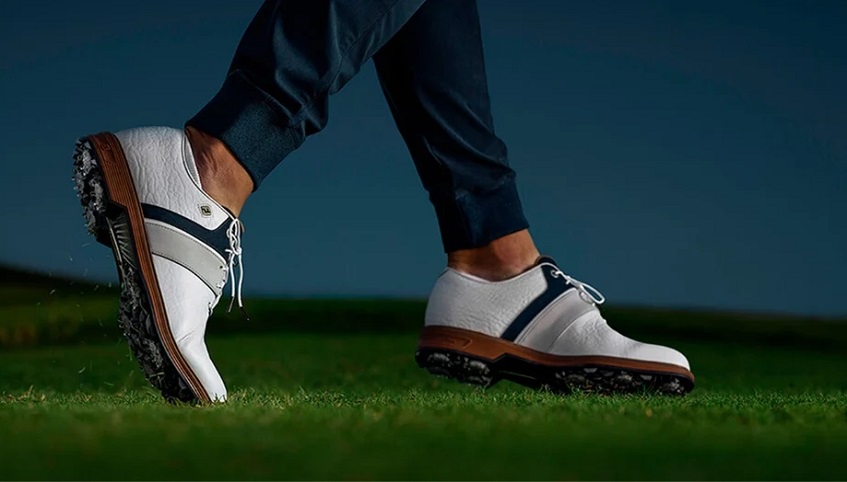
A Practical Guide to Choosing Men’s Golf Shoes
Golf shoes often get less attention than clubs or clothes, but they play a big role in how comfortable and stable you feel on the course. A full round involves hours of walking, standing, twisting, and shifting weight on uneven ground. The right pair of shoes supports all of that quietly in the background, while the wrong pair can distract you every step of the way.
Contents
Finding the Right Fit

Fit is the most important factor to consider when choosing all types of shoes, including your golf shoes. Even if you get the most durable materials and the best soles, without the proper fit, the shoes will be uncomfortable and won’t sit properly on your feet. Golf is a sport that includes repetitive swing motions, and you need stability through the midfoot and heel.
The first thing you should pay attention to is the toe room. Your toes should be able to move slightly without sliding forward. Finding high-quality, comfortable golf footwear for men’s feet starts when the toe box doesn’t cramp your toes and cause pressure. Make sure the heel is secure and doesn’t lift when you walk.
Don’t overlook width. If the shoes are too narrow, they can cause hot spots and rubbing. If they’re too wide, they can reduce stability and meddle with your swing. It’s a good idea to try the shoes later in the afternoon while wearing your golf socks. This is the time of day when your feet are slightly swollen, and you get the best idea about the fit. Focus on how the shoe feels when you shift the weight from heel to toe. It should feel supportive and balanced.
Traction and Sole Design
Golf courses can have different surfaces: soft grass, sand slopes and damp fairways. Having good traction will help you stay grounded with every swing and keep you confident while walking between shots. There are spiked soles that use replaceable traction elements.
They dig into the turf and have a strong grip in wet and hilly conditions. Golfers prefer to wear them during their early morning games and throughout the whole year. You can also find spikeless soles that have patterned designs or rubber nubs. Golfers love them because they’re lightweight, more flexible and easier to wear around the course.
The choice you make should reflect how and where you play. If you play on a firm court and in dry climates, you’ll benefit from spikeless shoes. If you play on a soft course and in wet conditions, spiked shoes will benefit you more. Keep in mind that spikeless shoes will also be better for walking on paved paths and around clubhouses.
Upper Materials and Construction
The upper material affects how a golf shoe feels, breathes, and performs over time. Leather is a popular choice for a good reason. Its durability and ability to mould to your foot are the main ones. This type of golf footwear for men’s feet has a classic look and, if properly treated, will have good water resistance.
Synthetic materials are also an option. They’re lighter and have more flexibility during the first few wears. Many modern designs use advanced synthetics that balance durability with breathability. Look for shoes with mesh panels to increase airflow, especially if you’re playing in warmer, more humid conditions.
Don’t overlook stitching, seams and overall build quality. If the upper is well-made and supports your foot without adding unnecessary weight, you’ve made the right choice. Some uppers have a water-repellent coating or reinforced areas in high-wear zones. This extends the shoe’s life and improves your comfort and performance in different weather and court conditions.
Comfort and Support Features
The more time you spend on the course, the more you realise how important comfort is. All men’s golf shoes should be comfortable to wear and have proper cushioning. They need to be able to absorb impact when you walk and reduce leg and foot fatigue. Look for midsoles made from responsive foam that provides a balance between softness and stability.
If golf is your passion and you’re on the course all the time, you need good arch support. Some shoes come with removable insoles, making it easier to customise support if needed. When trying on golf shoes, walk around and mimic your swing stance. Comfort should feel consistent in motion, not just when standing still.
Style, Versatility, and On-Course Practicality

Modern golf shoes are made to look like everyday trainers and not like traditional sports footwear. This means you can easily wear them outside the course, especially the spikeless versions. The style of the shoes has to align with the course expectations. A traditional venue requires traditional shoes and vice versa.
When it comes to colours, neutral tones are the safest option because they match the vibe of the sport and the dress code of all golf courses. If you travel with your clubs, consider how bulky the shoes are and how easily they pack. Lightweight, flexible shoes are often more convenient for golfers who play while travelling.
Cleaning and Maintenance
Taking care of your golf shoes will extend their life. Remove dirt and grass after every round using a soft, damp cloth. Always let the shoes air dry and don’t place them near heat sources because the materials can get damaged and crack.
Leather shoes need occasional conditioning, and synthetic ones should be cleaned regularly to prevent odour and material breakdown. If you wear spiked shoes, check the condition of the spikes every few rounds. Worn spikes reduce traction and can affect stability. Proper storage in a dry, ventilated space also helps maintain shape and comfort.
In Summary
The best men’s golf shoes are the ones that suit your feet, your courses, and how you like to play. Fit and comfort should always come first, followed by traction and material that match the playing conditions. Style and versatility are worth considering, but they should never come at the expense of support or stability. Taking the time to choose the right pair means fewer distractions on the course and more focus on your game, round after round.
Sorry, the comment form is closed at this time.