


Cricket Helmets Buying Guide: Maximise Protection and Performance on the Field
From a gentleman’s game played without protection, cricket has turned into a sport where advanced safety equipment is mandatory. Due to its technical demands, cricket can be dangerous if proper safety measures are not taken. Having the right equipment is crucial for any player, regardless of their skill level.
One of the must-have pieces of cricket protective gear is a helmet. Wearing one can provide several benefits, including protection against head injuries, improved confidence and performance and enhanced comfort.
As a vital piece of safety equipment for wicketkeepers, batsmen and close fielders, the helmet in modern cricket combines cutting-edge materials and rigorous testing standards that maximise protection and enhance performance. Whatever position you’re playing, you can explore cricket helmets and find the perfect match for you. Here are a few tips that may help you narrow down your search.
Contents
Different Types of Helmets to Choose From
Professional-grade helmets are intended for the demands of competitive players. They’re built with high-quality materials to withstand intense fights and allow for a clear view of the game. Youth helmets, on the other hand, are designed for players who value flexibility and comfort during long innings. They’re lightweight and ensure your head is protected without being overly weighed down.
Furthermore, you can design your own cricket helmet. A custom helmet, made to suit you, is a great idea if you wish to have your own personalised helmet. Size and colour can be customised according to your requirements, so you can add a unique touch to your protective cricket gear.
Tips on Choosing the Right Helmet
Buy Helmets that Meet Safety Certifications
Look for helmets that meet safety standards. A safety certification ensures that the helmet has undergone rigorous testing for impact protection and complies with international safety regulations. The ICC (International Cricket Council) has established specific regulations for helmets to ensure the safety of cricket players. The BSI (British Standards Institution) and Australian Standard (AS) have also certified helmets for cricket that meet these standards to ensure maximum protection against head injuries on the field.
Consider the Grille Material
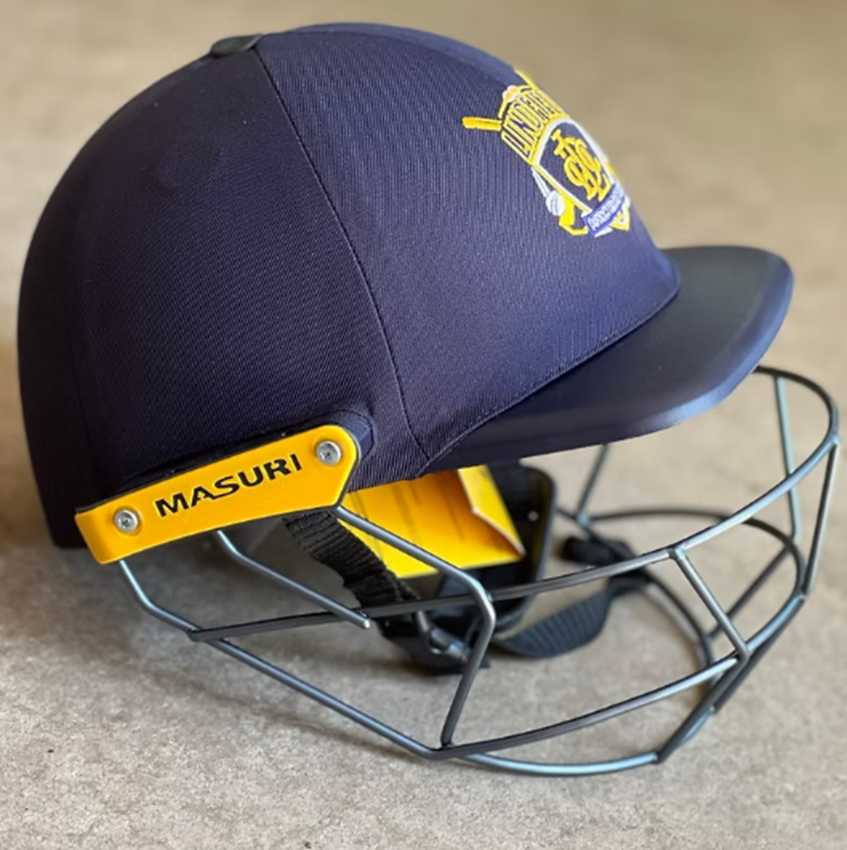
The grill is one of the essential components of a cricket helmet because it serves an important purpose: protecting the face. Grilles were once adjustable pieces, but not anymore. Manufactured from either stainless steel or titanium, grilles are fixed in place to eliminate the risk of cricket balls entering the gap between the grill and the shell.
Steel grilles are durable and affordable but slightly heavier than titanium grilles, which are lighter, more comfortable and offer better visibility, though at a higher price.
Consider the Shell Design
Modern helmets feature advanced materials and technologies, with many of them focusing on the shell. It’s one of the most important components and plays a crucial role in protecting the player, so it must be able to absorb impacts without sacrificing comfort or safety.
Choose the Perfect Size and Fit
A well-fitted helmet should not feel too tight or loose. To ensure a secure fit, look for helmets with adjustable chin straps and try them on if you can. If you’re buying online, seek advice from an expert who can help you select the right helmet.
Don’t Compromise on Comfort
Helmets are designed to keep players safe, but comfort is important, too. High-quality helmets feature internal padding that provides additional cushioning for your head in the event of an impact. Still, it also absorbs sweat and keeps you more comfortable throughout the game.
Buy From a Trusted Supplier
To stay on the safe side, always buy from a reputable supplier. Look for brands that specialise in cricket helmets because their helmets are designed with finesse, attention to detail and the highest levels of protection. Do your own research and go through photos and verified reviews before making a final decision.
Care and Maintenance Tips
To ensure the longevity of your cricket helmet, it’s crucial to maintain and care for it. Clean and dry the helmet after every training session or game and store it in a cool and dry place. Inspect the straps regularly for wear and tear. Even if there are none, it’s always a good idea to replace the helmet after a few years or after a significant impact.
Final Thoughts
Helmets are a part of every cricket gear list for beginners, but they’re a must-have for experienced players as well, especially for batsmen and wicket-keepers. Finding the perfect helmet depends on a few factors, including material, design, and level of protection. Look for a helmet that offers as much coverage for the key areas (head, face, and neck) and is comfortable to wear for hours on the field.
Following the safety rules on the field can build habits that lead to a safer cricket culture and make the game much more enjoyable for everyone involved. To enhance protection on the field, no player should compromise on the quality of their protective gear and should wear it during practice and games.
Sorry, the comment form is closed at this time.