

The Whats and Hows of Heat-Resistant Spray Paint
As threatening as climate change is, in much smaller amounts heat is good for us and the use of heat-resistant paint can help make that be the case more often than not. While primarily used to protect surfaces from heat exposure, heat resistant spray paint is also able to contain heat within a certain area or enclosure.
Because of that it can be used to provide insulating properties, and it can also be used to keep devices running for much longer. On some occasions, high heat resistant paint is used to provide a more aesthetically pleasing appearance in outdoor applications without the sun affecting its initial shine.
Contents
What to Consider With Heat-Resistant Spray Paint?
Surface
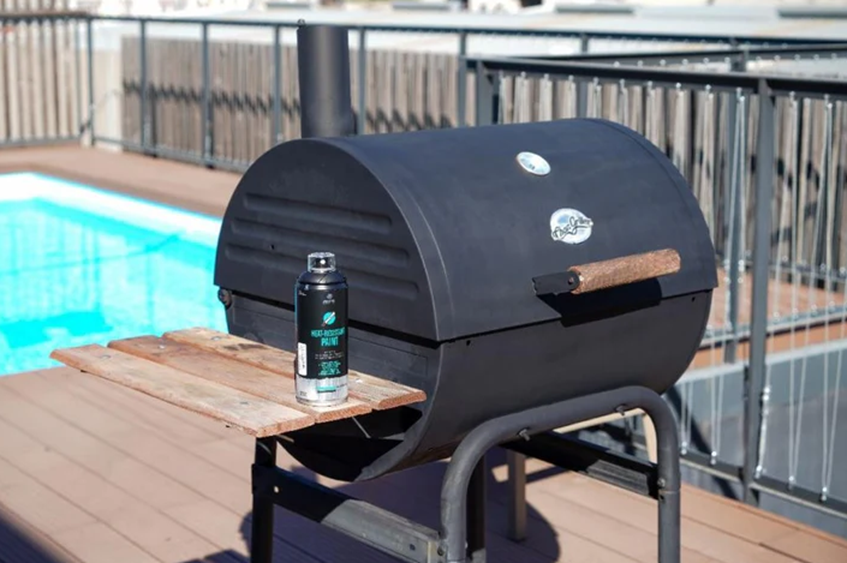
Selecting the paint according to the surface you’ll apply it on matters more than you think. Make sure that, if you’re, say, painting wood, you get a high heat spray paint can made exactly for it so as to have a long-lasting and tough coat of paint over the wood. Otherwise, the paint won’t stay on for long or not at all.
Range
The temperature range of the paint is equally as important as the surface it’s going to be used on. The wider this range is, the more versatile the paint is, as the higher the temperatures it can resist and therefore, the more use it finds in different scenarios. Keep in mind, though, that a paint’s temperature range should go slightly above the maximum temperature the paint is going to be exposed to. This is to ensure the paint stays on the surface for much longer.
Finish
There are six different types of finishes you can get with a heat resistant spray paint and those are flat, gloss, semi-gloss, high-gloss, metallic and satin. Flat paint has little to no gloss and appears matte, while gloss paint has a medium glossy finish and semi-gloss paint has a slightly glossier finish than flat paint. High-gloss paint is, obviously, the glossiest, while satin paint has medium gloss and a low-sheen finish. Metallic paint has a reflective finish, like that of a metal.
Recoat Time
The recoat time refers to the amount of time needed to pass before the paint is dry enough for another coat to be applied onto it. The shorter the recoat time, the better, as you can spend far less time painting than you would otherwise. While you can get other things done in between coats, if a paint has a lengthy recoat time, you still won’t be able to move on with your project before that.
Rust
You can also find high heat spray paint that is also rust-proof or rust-preventative. This improves the longevity of the paint further, as well as the lifespan of the component you’re painting it with. Keep in mind, though, that rust-preventative paint is mainly used on metal, but you can also apply it to wood or plastic, however it won’t do much in terms of material longevity.
Types of Heat-Resistant Spray Paint
Silicone-Based
Unlike a shampoo, a silicone-based spray paint is actually quite beneficial as it’s one of the most widely used heat-resistant spray paints. This type of paint is often used in industrial machines as well as on automotive exhaust systems, mainly because of the excellent heat resistance in enclosed spaces, but also outdoors. However, it is not the most capable.
Ceramic-Based
With ceramic-based paints, you get exceptional temperature resistance as well as thermal insulation. This is why you can see ceramic-based paint being used in the industrial, automotive and even aerospace industries, both for its protective and insulating properties.
Epoxy-Based
Alongside solid heat-resistance, with epoxy-based paint, you also get good abrasion and impact resistance. This is the main reason why they are used for electrical components and in petrochemical facilities.
Fluoropolymers
Using heat resistant paint that has fluoropolymers in it means you provide not only solid chemical protection and abrasion resistance, but also excellent protection from the elements. You can find high heat resistant paint with fluoropolymers in it used for non-stick cookware and bakeware, as well as in the architectural industry.
How to Use Heat-Resistant Spray Paint?
Prep
The first and most important step for the success of the latter two is surface preparation. This means you need to clean the surface from oil, graphite and grease so that the paint sticks to it properly and ends up in as smooth a finish as possible. Use white, clean and dry cloths or rags to clean the surface(s). Make sure to mask any parts you don’t need painted before you start painting.
Apply
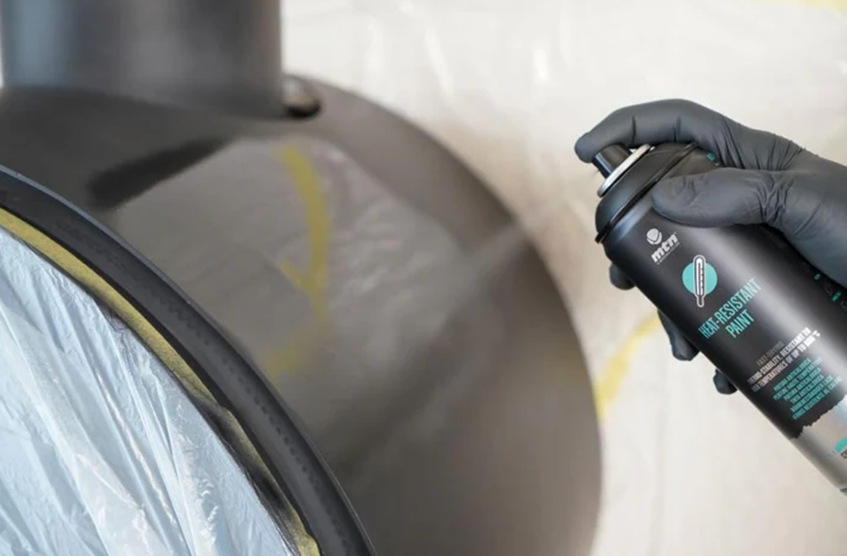
When the surface is prepared, start shaking the can and do so for about two minutes before applying the first coat of paint in a smooth and steady motion over said surface. Keep your fingers away from the nozzle when doing so and make sure to lift the can away from the surface where it curves or ends. The can should be roughly about 30 cm away from the surface.
Curing
Once you’ve applied a coat of paint, you should wait for it to dry off enough to spray the next coat on. When it comes to paint curing, however, you have to wait much longer. So, to strip away the masking tape and paper, you need to wait slightly less time than the curing time of the paint.
Sorry, the comment form is closed at this time.