

A Practical Guide to Choosing the Right Hunting Rifle Ammunition
One of the most crucial decisions to make as a hunter every season is to decide on the most appropriate hunting rifle ammunition to use. A mismatched load can mean a wounded animal or a wasted trip, while the right one turns a well-placed shot into a quick, clean harvest. Whether you’re heading out for whitetail in the hardwoods or elk in open country, understanding how to choose hunting ammunition is just as important as sighting in your scope.
Contents
Start with Your Rifle’s Calibre
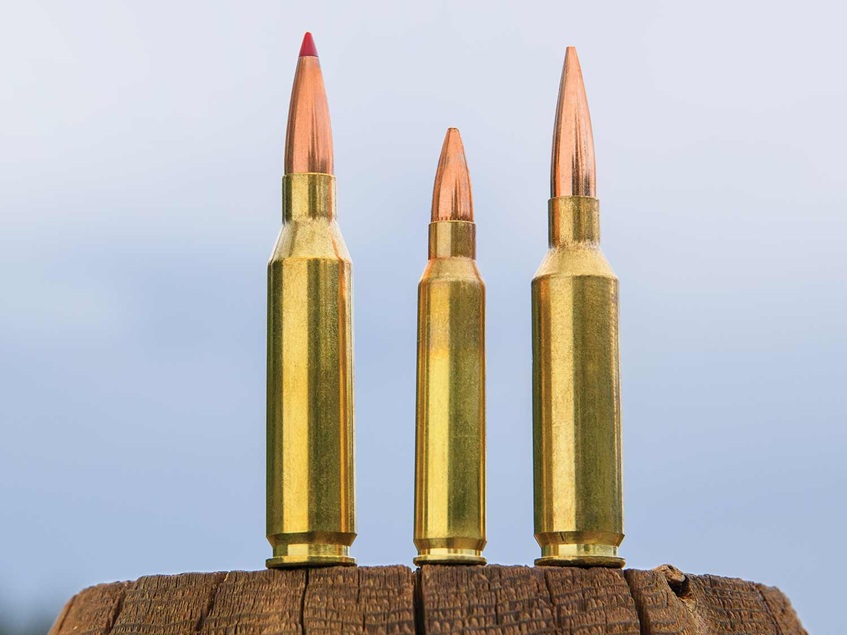
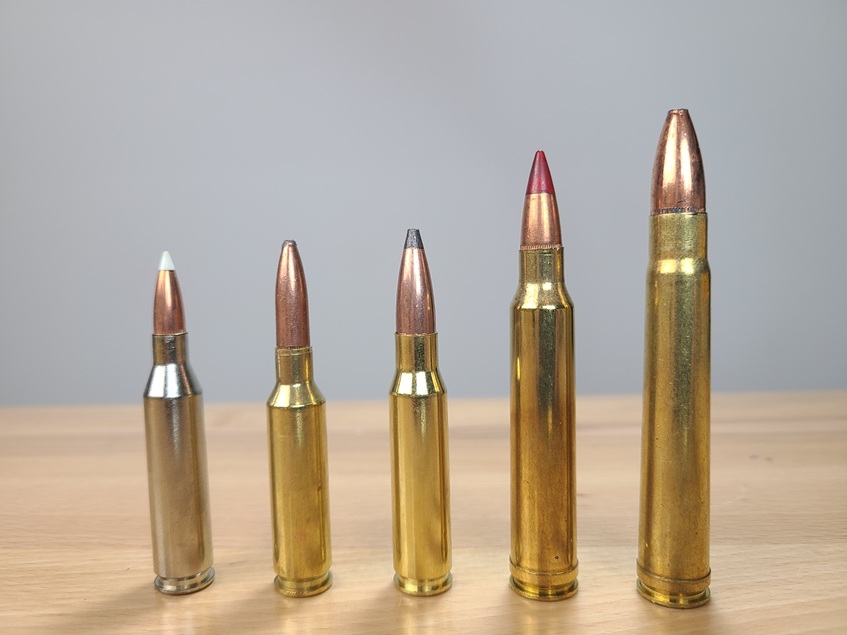
The choice always starts with your firearm. Every rifle is built to use a particular calibre of bullets, and there is no going around it – a .30-06 rifle will use .30-06 ammunition and nothing else. If you have bought a new rifle, think about the animals you will be hunting most often. Smaller calibres like .243 Winchester or 6.5 Creedmoor work well for deer-sized game with manageable recoil, while larger calibres such as .300 Winchester Magnum or .338 Win Mag are suited to elk, moose, or dangerous game. Match the calibre to the animal, not the other way around.
Match Bullet Type to Your Quarry
Once calibre is settled, it’s equally important to buy hunting rifle ammo that matches your quarry. Hunting bullets are designed differently depending on how big and strong the animal is:
- Varmint and predator loads consist of lightweight, fast-opening bullets, which will fragment during penetration – a good choice for small and thin-skinned game, where deep penetration is not needed.
- Medium game (deer, antelope, hogs) bullets combine expansion and penetration capabilities and typically use soft-point or polymer-tipped designs.
- Big and dangerous game bullets are designed to ensure deep penetration and weight retention, often using bonded or solid-copper construction so the bullet holds together through heavy muscle and bone.
Modern monolithic and bonded-core bullets have become popular because they solve the issue between penetration and expansion. The copper alloy design of the bullet permits deep penetration, while maintaining a large percentage of its weight for maximum impact, coupled with a hollow space inside the bullet that compresses and expands quickly upon impact – another example of modern hunting ammo at work.
Consider Bullet Weight
The weight of a bullet is expressed in grains and has an effect on the trajectory, the recoil, and the terminal energy. Bullets with greater weight generally retain more energy when firing at extended ranges and will penetrate deeper, but will drop quickly and generate higher recoil as well. Lighter bullets maintain a flat trajectory and shoot faster, but may drift easily and not penetrate enough on large game. Generally, bullets with moderate weights for your calibre provide the best compromise. If you’re hunting larger or tougher animals, lean toward the heavier end of what your calibre offers.
Get to Know Muzzle Velocity and Energy
Cartridge boxes display muzzle velocity (feet per second) and muzzle energy (foot-pounds), which can be used to compare loads. Higher velocities have a flatter trajectory and are easier to fire on targets because of reduced effects of poor range estimation. Muzzle energy is a proxy of the knock-down force, although the actual location of the bullet is of greater importance compared to energy alone. Generally speaking, most ethical hunters try to meet a certain energy level at the target (e.g., 1,000 ft-lbs for deer-sized game).
Factor In Range and Conditions
Think about the distances you actually shoot. If the majority of your shooting is at a distance under 150 yards through wooded areas, you don’t have to use a magnum long-range cartridge. Instead, go for a moderate calibre with a well-constructed bullet – it will do the job with less recoil and cost. If you shoot in open fields where your shots range past 300 yards, then using flat-shooting cartridges with good ballistics becomes more valuable. Also consider weather: cold temperatures can slightly affect powder performance, and wind matters more with lighter, faster bullets.
Practising With Your Hunting Ammunition
Once you select the ammunition, sight in your rifle and practice with the same load you will use when hunting. Different bullet weights and designs shoot to slightly different points of impact, even in the same rifle. Buy hunting rifle ammo from the same batch for sighting in and practising before using it on the hunting trip.
Purchase From a Reputable Dealer
Last but not least, purchase from suppliers that stock quality hunting ammunition and provide advice if necessary. The advantage of buying from a reputable dealer is that there is a reduced likelihood of getting outdated, mismatched, or improperly stored ammunition, especially a concern with hunting loads that may sit unused between seasons.
The Bottom Line
Selecting hunting rifle ammo involves matching four elements: the calibre of your rifle, the bullet design best-suited for your game, the proper bullet weight for your distance, and adequate practice to make accurate and confident shots with that particular load. The perfect match of these four elements will arm you for a successful hunt.
Sorry, the comment form is closed at this time.